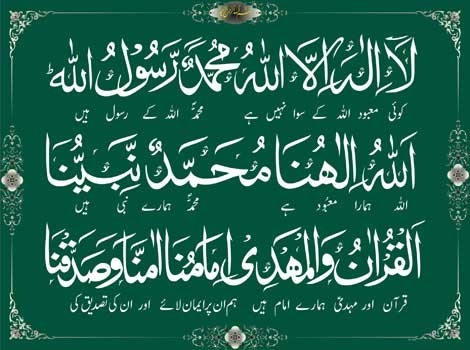
The primary distinction is that we (as Mahdavis) believe the Promised Mahdi (AS) has already come and gone. We believe that Hz. Syed Muhammad (AS), born in Jaunpur (India) in the 9th century Hijri (H) and who passed away in Farah (Afghanistan) at the age of 63, is indeed the Promised Mahdi (AS). Our core belief that Hz. Syed Muhammad (AS) is the true Promised Mahdi (AS) is based on his lineage, his conformity to the Quran and the Sunnah of Prophet Muhammad (SAWS), the fulfillment of prophetic descriptions, and the spiritual transformation witnessed among his followers.
In contrast, the majority of other Sunni groups believe that the Promised Mahdi (AS) is yet to come and will appear closer to the Day of Judgment, during the time of Hz. Isa (AS).
The Core Invitation of Imam Mahdi (AS):
As the Promised Mahdi (AS), Hz. Syed Muhammad (AS) invited people toward the true understanding of
Vilayath-e-Muhammadia — the spiritual path rooted in the teachings and examples of Prophet Muhammad (SAWS). His call was simple yet profound: to seek Allah (SWT) alone, to purify intentions, and to detach from worldly distractions. He urged believers to strive for Ihsaan (spiritual excellence) — worshiping Allah (SWT) as though one sees Him. Central to his invitation was the call to sincerely seek the Vision of Allah (SWT) in this world, through constant remembrance (Zikr), Love of Allah (SWT), complete submission, and strict adherence to the Quran and the Sunnah of Prophet Muhammad (SAWS).
In addition, Mahdi (AS) established and emphasized the practical framework of spiritual living known as the
Faraiz-e-Vilayath (Mahdavia Doctrine). These principles guide a believer toward purification of the heart and closeness to Allah (SWT), and includes the following:
- Tark-e-Duniya: Renouncing excessive attachment to the world.
- Talab-e-Deedar: Desire for the Vision of Allah (SWT).
- Zikr-e-Dawam: Constant remembrance of Allah (SWT).
- Tawakkal: Complete trust and reliance upon Allah (SWT).
- Sohbat-e-Sadiqeen: Keeping the company of the righteous.
- Hijrath: Migration for the sake of faith.
- Uzlat-az-Khalq: Retreat from distractions and unnecessary worldly engagement.
- Ushr: Giving one-tenth (tithe) in the path of Allah (SWT).
Besides this main difference, the following are additional areas where Mahdavia teachings place special emphasis:




 Launch your Graphy